How do you raise meat birds? Meat birds, typically Cornish Cross hybrids, go from chick to table-ready in 7 to 8 weeks. They need high-protein broiler feed (22–24%), about 3 square feet of coop space each, constant access to feed and water, and minimal exercise. Keep them separate from your laying flock if possible. The main decisions are feed management, housing setup, and whether to process them yourself or use a local butcher.
Earlier this year, I stopped by the local Tractor Supply to look at chicks. not to buy any, just to watch. I’d already picked up my birds for the season, but I can never walk past a brooder without stopping. Two chicks were getting beaten up pretty badly by the others, so I brought them back to health. They were labeled as Light Brahmas. They were not Light Brahmas.
They were Cornish Rocks. Within a few weeks, they were twice the size of every other chick in my brooder, and I had to figure out meat bird management in a hurry. Here’s what I learned.
What Is a Meat Bird?
Some people find the term “meat bird” a little blunt. “Broiler” is the friendlier version. Either way, you’re talking about a bird that’s been specifically bred to put on the most weight in the shortest amount of time possible.
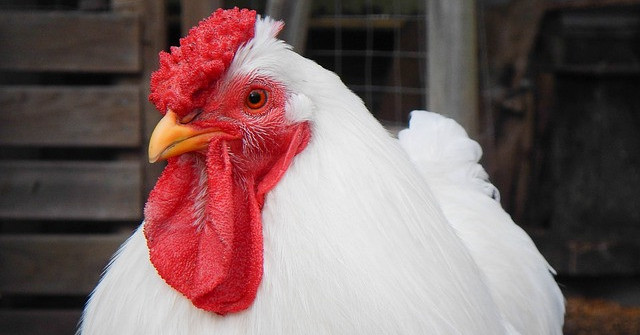
This is different from dual-purpose breeds like Rhode Island Reds or Barred Rocks, which can serve at the table but were also bred to lay. True meat birds are typically hybrids. The Cornish variety has naturally heavy breast and leg genetics, which is why the Cornish Cross, or Cornish Rock, is the industry standard for fast-growing broilers. Expect a plump, table-ready bird in as little as 7 to 8 weeks.
For context: a laying hen doesn’t start producing eggs until around week 16. That’s twice as long as it takes a meat bird to reach harvest weight.
Most farm stores label their chicks with basic information, egg color, laying productivity, meat bird designation, and full-size versus bantam. If you’re buying intentionally, that label is your guide. If you’re like me, you rescue first and ask questions later.
Brooding
At hatch, all chicks look roughly the same. That doesn’t last long. Meat birds grow approximately twice as fast as laying breeds, and the difference becomes obvious within the first couple of weeks. They eat more, drink more, and fill out noticeably faster.
Brooder space: Starting space requirements are the same as for laying chicks. As they grow faster and larger than expected, be ready to expand or separate sooner than you would with layers.
Feeder height: Raise the feeder as they grow. Broilers tend to dig into the feed aggressively and toss it around if the feeder lip is too low. Keeping it at chest height significantly reduces waste.
Feeder and waterer space: As they grow, add feeders and waterers to avoid crowding. A simple rule: measure the width of the birds and make sure there’s enough linear trough space for all of them to eat or drink at the same time. Twelve chicks, each 1.5 inches wide, need at least 18 inches of trough space.
Housing
Meat birds need a high-protein broiler feed. Look for a mix in the 22–24% protein range from your local farm store. This is what drives the rapid muscle development they’re bred for. Don’t substitute layer feed; it doesn’t have the protein profile broilers need.
On the question of ranging versus confinement: I believe in letting them do what they want. My Cornish Rocks were so heavy by the one-month mark that their version of ranging was waddling out of the coop, moving in four-foot increments around the building, and sitting back down. They’re not active birds. When they’re out like that, water needs to come to them; they’re not going to walk to it.
If you want to maximize growth rate and get to harvest in seven weeks rather than eight, a dedicated setup helps:
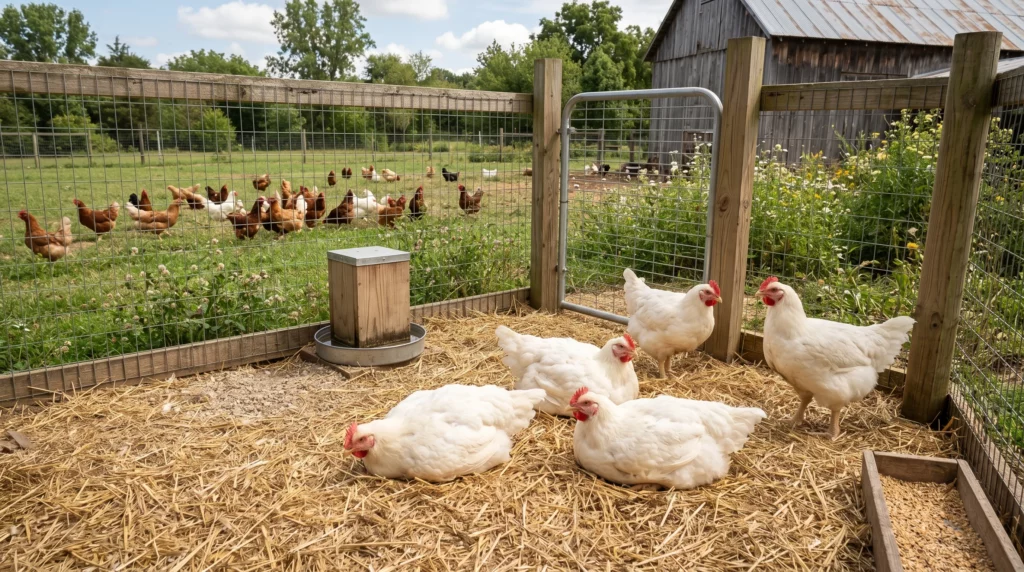
Separate coop: Keeping broilers apart from your layers lets you control their feed without the layers getting into the high-protein mix.
Extended light: More hours of light mean more hours awake, which means more eating and faster growth. 16–18 hours of light per day is the standard for commercial operations; for backyard broilers, even a few extra hours make a difference.
Limited exercise: This isn’t laziness on your part or cruelty to the bird. Broilers are bred to convert feed into muscle, not to roam. Restricted movement means more energy goes toward weight gain.
Space allowance in the coop is about 3 square feet per bird. They don’t need roosts. They won’t use them at that weight.
One health note worth knowing: Cornish Cross birds can develop leg problems and heart issues if pushed too hard or grown too fast without managed feeding. Some experienced broiler raisers restrict feed access for a few hours per day during weeks five and six to allow the skeletal system to keep up with the weight gain. It’s worth looking into if you plan to raise them regularly.
A Decision To Make
You raised these birds for a reason. At some point, that reason comes due. Turning a live broiler into dinner involves killing, bleeding, plucking, and butchering. And you need to decide in advance who’s doing that work.
Options:
Do it yourself: Straightforward once you know the steps, and I’ve got a separate article that walks through the full process.
Commercial poultry processor: Some areas have USDA-inspected facilities that will process small batches. It costs money but produces a clean, packaged result.
Local individual: I know a guy who will come to your property and handle it. Ask around at your farm store or local Facebook farm group. This kind of help is more available than most people expect.
If your goal is the full experience of raising your own food, read on.
Butchering Your Meat Birds
I’m not going to walk through the full butchering process here. That’s its own article. But if you’re planning to process at home, you’ll want to have this gear on hand before the day arrives:
A sharp boning knife
A killing cone (holds the bird still during the bleed-out)
A scalding tank to loosen feathers for plucking
A plucking surface or mechanical plucker, if you’re doing more than a few birds
A hose with running water nearby. There’s a lot of blood and mess
A clean table for butchering
Heavy garbage bags for offal and feathers
A cooler packed with ice for the finished birds
Getting this assembled ahead of time makes the day much smoother.
Why It’s Worth Doing
The whole process can feel a bit removed from modern life. But step back and consider what you actually know about the chicken at the grocery store, where it came from, how it was raised, what it was fed, how it was handled, and processed. With your own birds, you know all of it. Every part of it.
That’s not a small thing. Raising your own meat birds is one of the most direct connections you can have to your food supply, and the result in the kitchen is reflected by more flavor, texture, and freshness.
It just takes a little time and willingness to learn.
Contains information related to marketing campaigns of the user. These are shared with Google AdWords / Google Ads when the Google Ads and Google Analytics accounts are linked together.
90 days
__utma
ID used to identify users and sessions
2 years after last activity
__utmt
Used to monitor number of Google Analytics server requests
10 minutes
__utmb
Used to distinguish new sessions and visits. This cookie is set when the GA.js javascript library is loaded and there is no existing __utmb cookie. The cookie is updated every time data is sent to the Google Analytics server.
30 minutes after last activity
__utmc
Used only with old Urchin versions of Google Analytics and not with GA.js. Was used to distinguish between new sessions and visits at the end of a session.
End of session (browser)
__utmz
Contains information about the traffic source or campaign that directed user to the website. The cookie is set when the GA.js javascript is loaded and updated when data is sent to the Google Anaytics server
6 months after last activity
__utmv
Contains custom information set by the web developer via the _setCustomVar method in Google Analytics. This cookie is updated every time new data is sent to the Google Analytics server.
2 years after last activity
__utmx
Used to determine whether a user is included in an A / B or Multivariate test.
18 months
_ga
ID used to identify users
2 years
_gali
Used by Google Analytics to determine which links on a page are being clicked
30 seconds
_ga_
ID used to identify users
2 years
_gid
ID used to identify users for 24 hours after last activity
24 hours
_gat
Used to monitor number of Google Analytics server requests when using Google Tag Manager