
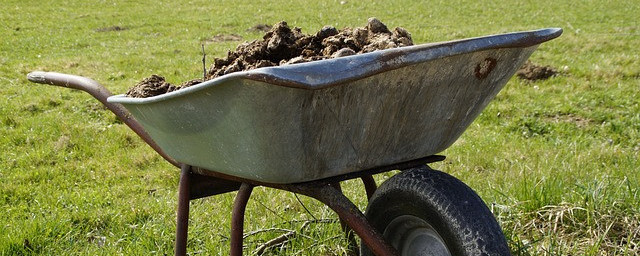
How Do You Use Chicken Manure in Your Garden?
Compost it for a couple of months, or brew it into a tea before using it on your plants. Fresh chicken manure is “hot,” meaning it’s so nutrient-rich that it can chemically burn plants. Once it’s composted, use it as mulch or work it into the soil. If you make tea, dilute it to about 300:1 to start.
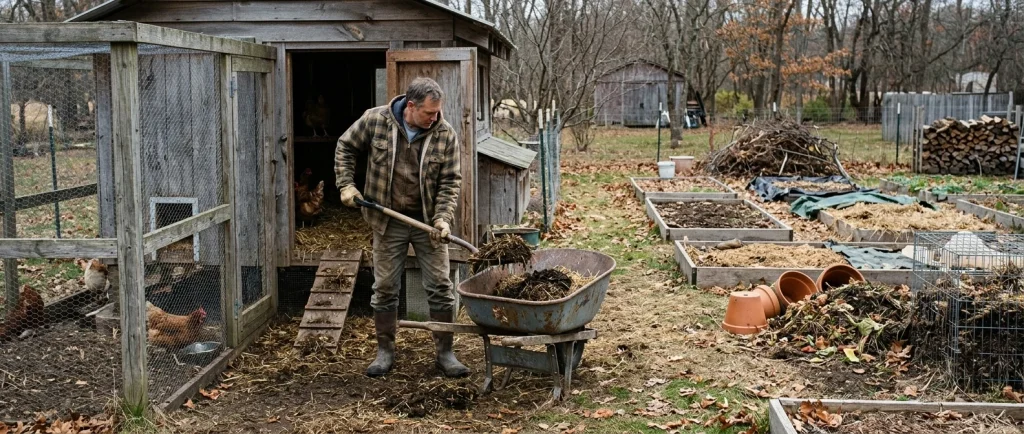
Chicken manure is a mix of chicken droppings, bedding, and other coop debris. Because it’s so hot, it pays to use it wisely. It works in solid and liquid form, and both are loaded with the big three nutrients: N(itrogen), P(hosphorus), and K(otassium, uh, potassium, I mean).
NPK is the ratio you see on the front of fertilizer bags. For example, 5-10-5 is 5 percent nitrogen, 10 percent phosphorus, and 5 percent potassium. That’s not the point of this article, but it’s nice to know, right?
Nitrogen helps produce nice, green leaves, so I like to think of it as “nicetrogen.” Phosphorus helps with roots, seeds, blossoms, and fruit, so I like to think of it as “fruitphorus.” Potassium makes plants strong with hearty stems, so I like to think of potassium as having a lot of a_ _ to it. Now try to forget what each nutrient does. You can thank me next time you run into me.
I digress.
Table of Contents
What Do You Mean by “Hot”?
Fresh chicken manure is called “hot” because it’s high in NPK and other nutrients, and it releases them so quickly that most garden plants can’t handle it. The hotness isn’t physical heat. It’s more of a chemical burn, and that burn can kill your plants.
Compost and Tea
There are two ways to cool down your chicken manure. The first is to compost it. Use a 2:1 ratio of two parts brown material, like leaves, hay, or wood shavings, to one part green material, which in this case is your chicken poop. Let it work for a couple of months, or until it looks like dirt. A big pile can take longer.
The second way is to make a tea. Fill a barrel, a 55-gallon drum, a 20-gallon drum, or a 5-gallon bucket — the size doesn’t matter — with your 2:1 mix and cover it with water right to the top. Stir it up a little, cover it loosely so gases can escape, and let it sit for a couple of weeks, stirring now and then.
Hot tip: find some leaf mold in the woods by pulling back the dry top layer of leaves to the moist leaves underneath. Toss those into your tea to really get things working.
After a couple of weeks, dip a small amount of tea into a watering can and dilute it to 300:1. That’s not a typo. 300:1 is where you want to start. This tea is super hot, so dilution is the solution to happy plants. Then water at will.

Nutrient Content of Chicken Manure
Poultry manure contains a wide range of the nutrients plants need, including nitrogen, phosphorus, potassium, calcium, magnesium, sulfur, manganese, copper, zinc, chlorine, boron, iron, and molybdenum. Here’s the breakdown for fresh chicken manure.
| Element/Nutrient | % Content |
| Nitrogen (N) | 2.5 – 3.5 |
| Phosphorus (P) | 1.5 – 2.5 |
| Potassium (K) | 1.0 – 1.5 |
| Calcium (Ca) | 1.0 -1.5 |
| Magnesium (Mg) | 0.3 – 0.5 |
| Sulfur (S) | 0.2 – 0.3 |
| Iron (Fe) | 0.01 – 0.02 |
| Manganese (Mn) | 0.005 – 0.01 |
| Zinc (Zn) | 0.003 – 0.005 |
| Copper (Cu) | 0.001 – 0.002 |
| Boron (B) | 0.001 -0.002 |
| Chlorine (Cl) | < 0.1 |
| Molybdenum (Mo) | < 0.01 ppm (parts per million) |
Using Dry Manure in Your Gardens
It doesn’t matter whether it’s your flower beds, vegetable garden, orchard, or herb garden. Chicken manure compost is a great fertilizer that checks all the boxes for lush green foliage, strong blossoms and fruit, and vigorous, hearty plants.
Some plants don’t benefit much from all that nitrogen, namely root vegetables like carrots, turnips, and radishes. High nitrogen boosts leaf growth, but root veggies prefer potassium.
In the fall, mulch your gardens with a 1-inch layer of compost to keep the weeds down. In the spring, work it in with a fork or tiller for a great start to the growing season. During the growing season, spread compost across the soil surface, keep it away from plant stems, and fork it in.
I almost forgot to mention that strong plants resist disease better than plants relying only on native, unfertilized soil.
Using Chicken Manure Tea
The key to using tea is dilution. Straight from the barrel, it’s very hot, and pouring it directly onto your plants would fry them in no time. As I said, start at about 300:1.
If the plants watered at 300:1 don’t react badly, ease the dilution to 200:1, then 100:1, and so on until you get the results you want. Water just as you would with plain water, but avoid watering the leaves of anything you’ll eat, like spinach, lettuce, and basil, to steer clear of E. coli and Salmonella.
If you mix a 55-gallon drum of tea, you’ll have a lot of fertilizer. Once your plants have shown they can handle a stronger mix, even a 50:1 dilution stretches that drum to roughly 2,700 gallons. Your friends would appreciate a high-powered fertilizer like that as a gift, especially with what fertilizer costs these days. A free gallon of tea that dilutes to 50 gallons is a pretty tempting deal.
Composted chicken manure makes a great fertilizer, and you can also make it into tea. Just use it carefully so you don’t burn your plants.
FAQ
Why is fresh chicken manure bad for plants?
It’s “hot,” meaning so high in nutrients that it releases them too fast for plants to handle, causing a chemical burn rather than literal heat.
How long does chicken manure take to compost?
A couple of months, or until it looks like dirt. A larger pile can take longer.
How much tea do I add to 55 gallons of water?
At a starting dilution of 300:1, add about 23.5 ounces, just shy of three 8-ounce cups. Adjust from there based on how your plants respond.
Can I use manure tea on leafy greens?
Don’t water the leaves of anything you’ll eat, like lettuce, spinach, or basil. Raw manure can carry E. coli and salmonella.
Can I buy liquid chicken manure in bulk?
Probably not. A fertilizer manufacturer told me no one he knows handles it because it’s difficult to manage pathogens.
If you have any questions, please leave them below, and I’ll get back to you within a day. Take care.
Dave

Chickenmethod.com
Where can I buy BULK liquid Chicken manure, already in a tote or jugs? I use it for turf, golf courses etc.
Thx,
Dave
Hey, Dave.
I’ve been searching high and low for a vendor for your needs, and it seems that what you are looking for either doesn’t exist, or is quite rare. I am currently in contact with a fertilizer manufacturer, asking about your inquiry. I’m waiting for his reply, so stop back in a day or two to see what I come up with. That’s what I have for now. Have a great day.
Dave
Hey Dave,
I know it has been more than a day or two, but I have been told by a fertilizer manufacturer that due to the difficulty in managing pathogens, etc. no one that he is aware of handles liquid chicken manure. Sorry, I guess you’ll have to get a 55-gallon drum and clean out somebody’s chicken coop for them. Sorry for the delayed response. All the best to you.
Dave
I have recently made a box out of used pallets. Covered the inside of the box with 80% shade cloth to keep the chicken manure off the pallet wood but to allow access of air to the box. Beneath the box a placed 110mm waste pipes cut down the length. The waste pipes drain in to a collecting drum. The chicken manure is watered from above so that the water drains through the manure. I intend to use the diluted chicken manure as a liquid fertilizer.
Your thoughts please.
Hi there, David!
What a creative and resourceful setup you’ve made! Using pallets and shade cloth is a great way to repurpose materials, and it sounds like you’ve put a lot of thought into the design.
Your method of using shade cloth to keep the chicken manure off the pallet wood while allowing airflow is smart. Good ventilation is essential for preventing moisture buildup and potential mold issues.
The drainage system with the waste pipes leading to a collecting drum is also well-thought-out. By watering the manure and collecting the runoff, you’re creating a nutrient-rich liquid fertilizer, which can be highly beneficial for your garden. Of course, you can do your own testing, but I suggest a massive dilution to start watering with and don’t spray directly on leaves as you could “burn” them.
One suggestion: keep an eye on the moisture levels in the box to ensure it’s not too wet, which could lead to anaerobic conditions and unpleasant odors. It might also help to periodically check the pH level of the liquid fertilizer to ensure it’s balanced for your plants’ needs.
Overall, it sounds like a fantastic system! Thanks for sharing your innovative approach. Happy gardening!
Best,
Dave
I have 55 gallons of water I use to water my plants. How much of the chicken poop tea should I put in the 55 gallons of water to fertilize my gardens?
Hi, Stee! By starting with a 300:1 dilution, you have 55 gallons of water times 128 ounces per gallon which is 7040 ounces. Divide that by 300 and you get 23.5 ounces which is just shy of three 8oz cups. So you can start by adding 3 cups and adjust according to how well your plants are doing. Remember to avoid watering leafy greens leaves to avoid illness. Happy gardening!
I have started a bunch of seeds already. I always struggle with them going leggy on me, but a friend told me to put a reflective surface behind the seedlings to keep them going stright up and sturdy. i’m going to try aluminum foil.
Dave