
What should you be feeding chickens for better egg yolks?
Darker, richer yolks come from hens with access to fresh greens, quality protein, and key nutrients including carotenoids, omega-3 fatty acids, vitamin E, and calcium. Specific foods that make a measurable difference include kale, dandelion greens, marigold petals, flaxseed, mealworms, and scrambled eggs. Free-ranging accelerates the improvement noticeably. A quality feed supplement like Kickin’ Chicken can help fill nutritional gaps, particularly during molt. Results show up in the yolk within two to three weeks of dietary changes.
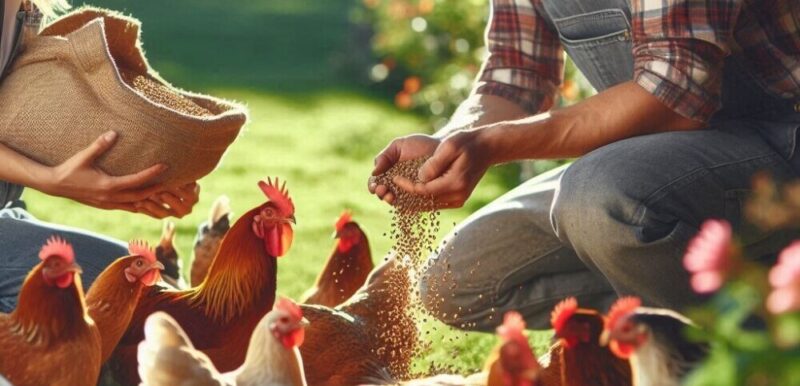
Egg quality is something I think about a lot. I give away a fair number of eggs, and the response is consistently the same: people are surprised by how different a fresh backyard egg looks and tastes compared to what they buy at the store.
A friend came back from a cross-country van trip recently and said one of her biggest challenges was finding good fresh eggs on the road. That stuck with me. Once you have gotten used to eggs less than a week old with deep orange yolks, grocery store eggs are a different product entirely.
What makes that difference is almost entirely diet.
Table of Contents
Why Yolk Color Matters
Yolk color is not cosmetic. A deep orange yolk indicates higher concentrations of carotenoids, specifically lutein and beta-carotene, as well as more omega-3 fatty acids and vitamins A and E compared to a pale yellow yolk. These are nutritional differences, not visual ones.
Carotenoids come from plants. Hens cannot synthesize them on their own, so the only way they end up in the yolk is through what the hen eats. This is why a hen with access to fresh greens and natural foraging produces visibly different eggs from a hen on grain-only feed in a confined setting.
Feeding Chickens For Better Egg Yolks Starts With Balanced Layer Feed
A quality layer feed is the baseline everything else builds on. It should contain 16 to 18 percent protein, adequate calcium for shell strength, and a full vitamin and mineral profile. This is not optional. No amount of supplementing fixes a poor foundation feed.
From there, what you add on top of the base feed is what moves the needle on yolk quality.
Common feed ingredients include grains, seeds, and greens. However, supplements like Kicken Chicken for vitamin E, Choline, lecithin, and more; oyster shells for calcium or grit to help digestion can also play a vital role.
Make sure you’re offering a well-rounded diet to keep those hens happy and productive.
Greens and Vegetables
Fresh greens are the single most impactful addition for yolk color and nutrient density. Kale, spinach, dandelion greens, and Swiss chard are all high in carotenoids and get absorbed quickly. You will see a visible change in yolk color within two to three weeks of regular access.
I free-range my girls so they do their own foraging most of the year. They find what they want, and the yolks reflect it. During winter when ranging is limited, I supplement with kitchen greens and whatever is available.
Carrots and pumpkin are worth adding when you have them. Both are high in beta-carotene and hens tend to go after them aggressively, especially pumpkin. Squash seeds are a bonus: they have mild antiparasitic properties and chickens love them.
Marigold Petals
Marigold petals are one of the more specific additions worth knowing about. They contain xanthophylls, a class of carotenoids that deepens yolk color more directly than most other plant sources. Commercial egg producers use marigold extract in feed for exactly this reason. Dried marigold petals mixed into feed or scattered fresh work equally well. Grow them in your garden, and you have a free, continuous supply.
Protein
Protein supports overall hen health and directly affects egg quality. High-protein additions I use regularly:
Mealworms are a reliable favorite. Dried or live, hens go after them hard, and the protein content is high.
Scrambled eggs are counterintuitive but effective. I often have an oversupply, so I scramble a dozen or so and let the girls go at them. They love it, and it does not promote fresh egg eating because scrambled eggs look nothing like a whole egg in the nest.
Fish scraps and canned sardines in water, not in oil, are another good option for occasional protein and omega-3 supplementation.
Omega-3 Fatty Acids
Flaxseed is the easiest way to boost omega-3 content in eggs. Mix ground flaxseed into the feed at about one tablespoon per bird per day. Chia seeds work similarly. The omega-3 content in the eggs increases measurably within a few weeks of consistent supplementation. This is one of the genuine nutritional differences between backyard eggs and commercial eggs that research consistently confirms.
Calcium and Shell Quality
A hen producing eggs at peak rate is constantly pulling calcium from her body. If dietary calcium is insufficient, she pulls it from her bones, which is not a sustainable situation. Strong shells and healthy laying require consistent calcium supplementation.
Offer free-choice oyster shell in a separate container from the layer feed. Hens self-regulate their calcium intake and will take what they need. Crushed eggshells work as well if you dry and crush them first, though the contribution is smaller.
Vitamin E
Vitamin E supports overall egg quality and immune function in laying hens. Wheat germ and sunflower seeds are both good natural sources. Add wheat germ to the feed or offer sunflower seeds as a supplement a few times per week.
Kickin’ Chicken
I have been using Kickin’ Chicken as a feed supplement for a while, and it is worth mentioning here. It is formulated specifically for laying hens and covers vitamin E, choline, lecithin, and several other nutrients that standard layer feed does not provide in meaningful quantities. It is particularly useful during molt when nutritional demands are high, and feed intake sometimes drops. I wrote a full review of it on the site if you want more detail.
Grit, Water, and Probiotics
A few supporting factors that do not get enough attention:
Grit is essential for any hen eating whole grains, scratch, or fibrous plant material. Without it, the gizzard cannot grind food properly, and nutrient absorption suffers. Offer free-choice grit alongside the feed.
Water is the most overlooked factor in egg quality. Hydration directly affects the consistency of whites and yolks. Fresh, clean water available at all times is not optional.
Probiotics support gut health, which affects how efficiently hens absorb nutrients from their feed. Plain yogurt in moderation is a natural source. Commercially prepared poultry probiotics added to water work well for routine supplementation.
Putting It Together
You do not need to implement everything at once. Start with two changes: add fresh greens daily and confirm calcium is available free-choice. Give it three weeks and look at your yolks. From there, add what makes sense for your setup.
The improvements are visible and consistent. That is what makes this one of the more satisfying areas of chicken keeping. You put better food in, you get better eggs out, and the difference shows up every morning in the pan.
Dave
Chickenmethod.com
Frequently Asked Questions
How long does it take to improve egg yolk color through diet?
Most keepers see a visible change in yolk color within two to three weeks of consistent dietary improvements. Access to fresh greens, marigold petals, and flaxseed is the fastest-acting change. Free-ranging on fresh pasture produces the most dramatic improvement.
Do scrambled eggs make chickens want to eat their own eggs?
No. Scrambled eggs look and smell entirely different from a fresh egg in the nest. Hens that eat scrambled eggs do not make the connection between what they are eating and what they are laying. Egg eating in the coop is usually caused by thin shells, accidental breakage, or boredom, not by dietary exposure to scrambled eggs.
What is the best supplement for darker egg yolks?
Marigold petals are the most direct supplement for yolk color because of their xanthophyll content. For overall nutritional quality including omega-3 content, ground flaxseed is the most well-supported option. A comprehensive supplement like Kickin’ Chicken covers multiple nutritional gaps in one addition.
Can you improve egg quality without free-ranging?
Yes. Free-ranging accelerates improvement because hens have access to a wide variety of plants and insects, but the same nutritional goals can be reached through deliberate supplementation. Fresh greens, flaxseed, mealworms, and marigold petals added to a confined flock’s diet produce comparable results over a slightly longer timeline.
How much oyster shell should I give my hens?
Offer oyster shell free-choice in a separate container from the layer feed and let the hens regulate their own intake. Most hens consume roughly four to six grams per day during peak laying. Do not mix oyster shell into the layer feed; some hens need more than others, and free-choice access allows each bird to take what she needs.