

What are the most common egg incubation problems and solutions?
The four most common incubation problems are temperature fluctuations, incorrect humidity, poor egg turning, and infertile eggs. Ideal temperature is 99.5 degrees Fahrenheit throughout incubation. Humidity should run 40 to 60 percent for the first 18 days and rise to 75 percent for the final three days. Eggs need turning a minimum of three times daily until day 18. Infertile eggs should be identified by candling and removed promptly. A quality automatic incubator handles most of these variables for you.
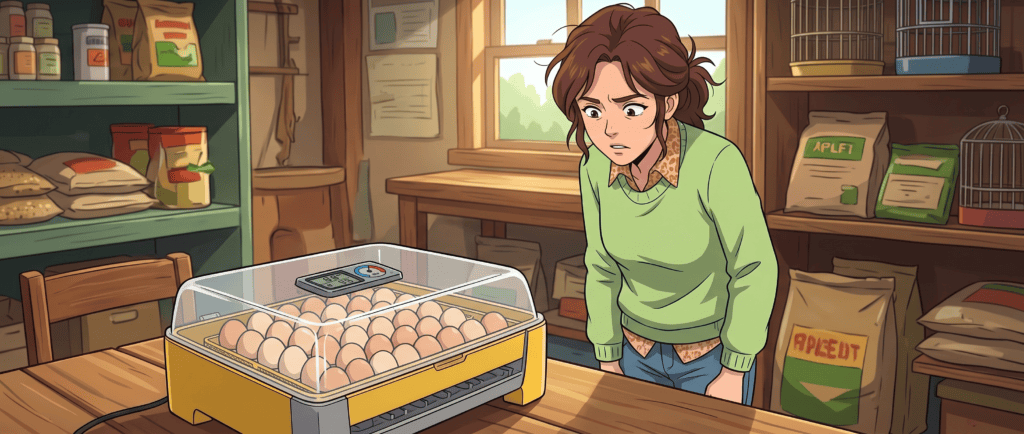
Hatching eggs is one of the more rewarding things you can do in backyard chicken keeping, and one of the more humbling. You can do everything right and still end up with a disappointing hatch. You can also make rookie mistakes and have chicks coming out of every egg. Understanding what goes wrong and why gives you the best chance of consistent results.
Table of Contents
Temperature Fluctuations
Temperature is the most critical variable in the incubator. The target for chicken eggs is 99.5 degrees Fahrenheit throughout the incubation period, with very little tolerance for deviation in either direction. Too high for a sustained period damages the embryo. Too low slows or stops development entirely.
The most common cause of temperature swings is also the most avoidable: opening the incubator too often. Every time you lift the lid, you release heat and humidity, the heater kicks on to compensate, and you get a spike followed by a drop. Curiosity is the enemy of a stable incubator.
The only legitimate reasons to open the incubator during the first 18 days are to turn eggs manually if your incubator lacks an automatic turner, and to candle eggs to check fertility and development.
Candling should happen twice at most. Once around day 7 to confirm fertility and once around day 14 to check progress. After day 18, do not open the incubator at all until the hatch is complete.
A separate thermometer inside the incubator is worth having. The built-in displays on budget incubators are not always accurate, and a few degrees of error in a reading makes a real difference over 21 days.
Humidity Levels
Humidity controls how much moisture evaporates from the egg during incubation. Too much moisture and the chick drowns before it can pip. Too little and the membranes dry out and tighten around the chick, making it impossible to exit the shell.
Target humidity for the first 18 days is 40 to 60 percent relative humidity. On day 18, when you stop turning eggs and enter lockdown, raise humidity to 75 percent and keep it there through the hatch. The higher humidity softens the membrane and helps the chick pip and zip out cleanly.
Most incubators manage humidity through water reservoirs in the base of the unit. Keep those filled and adjust the amount of exposed water surface area to raise or lower humidity. A separate hygrometer to verify the readings is the same practical advice as the separate thermometer.
Egg Turning

A broody hen shifts her eggs constantly throughout the day, never letting the embryo settle against one side of the shell. When we incubate without turning, the embryo can stick to the shell membrane and development stops.
Turn eggs a minimum of three times per day at roughly equal intervals through day 18 to avoid those egg incubation problems. Odd numbers of daily turns are better than even numbers because the egg ends each day on the opposite side from where it started.
Automatic turners in quality incubators handle this reliably and remove one more variable from your management.
On day 18, stop turning and do not open the incubator again. The chick is positioning itself for hatch and needs to be left undisturbed.
Infertile Eggs
Adding to our egg incubation problems, an infertile egg will not develop and, left in the incubator long enough, will eventually explode. The smell of a rotten egg in an incubator is something you will not forget. Candling around day 7 lets you identify and remove them before that happens.
A clear egg with no visible veining or embryonic development by day 7 is almost certainly infertile. A blood ring inside the egg means the embryo started developing and died early. Both should come out.
Common reasons for infertility include no rooster in the flock, a rooster-to-hen ratio that is too low (one rooster per eight to ten hens is a reasonable minimum), hens or roosters outside their prime laying years, poor flock nutrition, and high stress levels in the flock from predator pressure or overcrowding.
Eggs that have been improperly stored before setting, kept too warm, too long, or washed before incubation, also show lower hatch rates.
Ventilation
Developing embryos need oxygen and produce carbon dioxide. An incubator without adequate airflow suffocates embryos the same way a sealed room suffocates a person. Keep ventilation ports clear and do not block them with bedding or tape in an attempt to control temperature.
Clean your incubator between hatches to prevent debris from blocking airflow and to avoid further egg incubation problems.
Egg Incubation Problems and A Note on Incubator Quality
Budget incubators introduce more variables than they solve. Inaccurate temperature controls, poor humidity management, and unreliable turners all contribute to egg incubation problems and disappointing hatches that seem inexplicable. A mid-range incubator with digital controls, an automatic turner, and a reliable thermostat removes most of the common failure points. I have a beginner’s guide to incubators on the site if you want a breakdown of what to look for before you buy.
One thing worth knowing: cross a Rhode Island Red with a New Hampshire Red and you will hatch Production Red chicks. If consistent egg production is your goal, that is a hatch worth planning.
Dave

Chickenmethod.com
Frequently Asked Questions
What temperature should a chicken egg incubator be set to?
99.5 degrees Fahrenheit is the standard target for forced-air incubators. Still-air incubators, which rely on natural convection rather than a fan, run slightly warmer at around 101 to 102 degrees measured at the top of the eggs. Use a reliable separate thermometer to verify your incubator’s actual temperature rather than relying solely on the built-in display.
What humidity should I use for incubating chicken eggs?
40 to 60 percent relative humidity for the first 18 days, rising to 75 percent from day 18 through the end of the hatch. The higher humidity during lockdown helps soften the shell membrane so the chick can pip and exit cleanly.
How many times a day should you turn incubating eggs?
A minimum of three times per day at roughly equal intervals. More is fine. Automatic turners in quality incubators turn eggs every hour or two, which closely mimics what a broody hen does naturally. Stop turning on day 18 and do not open the incubator until the hatch is complete.
How do you tell if an incubating egg is still alive?
Candling is the most reliable method. Hold a bright flashlight against the large end of the egg in a dark room. A fertile egg developing normally shows a network of blood vessels by day 7 and a visible dark embryo with movement by day 14. A clear egg with no development is infertile. A blood ring indicates early embryo death.
Why did my eggs not hatch?
The most common causes are temperature fluctuations during incubation, incorrect humidity (too low causes the membrane to dry out and trap the chick; too high causes drowning before pip), infertile eggs that were not removed early, eggs that were not turned properly, and poor ventilation. A single disappointing hatch is not always preventable. Consistent problems across multiple hatches almost always point to one of these variables.
Hi, I think your blog might be having browser compatibility issues.
When I look at your blog site in Safari, it looks
fine but when opening in Internet Explorer, it
has some overlapping. I just wanted to give you a quick heads up!
Other then that, great blog!
Thanks so much for the heads-up! I am currently doing a complete overhaul of my site. I likened it earlier to gutting a house while talking with a co-worker. When I’m done, the site will be more coherent, easily navigable, SEO streamlined, and infmormative. I truly appreciate the comment. Thank you.
Dave