
What Is Egg Candling and How Do You Do It?
Egg candling is the practice of shining a bright light through an eggshell to see inside without cracking it open. It lets you check whether an egg is fertile, track embryo development day by day, and catch problems early, like a dead embryo or a crack, before you waste weeks incubating an egg that was never going to hatch.
Table of Contents
Every backyard chicken keeper eventually runs into the question of whether their eggs are actually developing. Candling is how you find out without guessing.
What Is Egg Candling, Exactly?
Candling is a simple, non-invasive technique. You shine a bright light through the shell to see what’s happening inside. It used to be done with an actual candle, which is where the name comes from, but these days a small LED tool does the job better.
My parents owned a general merchandise store back in the 1960s, and I remember them taking cases of eggs into the darkest room in the building, a windowless bathroom, and getting down on their knees to candle egg after egg. They had to check every one so they didn’t accidentally sell a fertile egg to a customer expecting a regular breakfast egg.
Why Candling Matters
Candling gives you a real window into what’s happening inside the egg before it hatches. It helps you identify which eggs are actually fertilized, track how the embryo is progressing, and catch problems early enough to do something about them.
It also helps you catch cracked eggs. A cracked shell can let bacteria in, which can kill the embryo and, worse, contaminate the rest of your incubator if it’s not caught and removed in time.
What You Need
A decent candling light makes a real difference. Look for one with high lumens and a small aperture so the light stays focused. I’ve had good results with the Magicfly Rechargeable Wireless Egg Candler.

Safe, Convenient, and Portable light is there for you when you need to know what's going on inside the shell of your incubating eggs.

How to Candle an Egg
It’s a simple process, but it calls for a gentle touch.
Find a dark room and a flat surface to work from. Hold the egg with the larger end against the light source. Look for veins, a dark spot that indicates a developing chick, or a clear yolk, which points to an infertile egg.
Handle the egg gently throughout, the embryo inside is fragile, especially early on. I don’t candle at all during the first week of incubation for that reason. Days 7 through 15 are the best window for candling. After day 15, it’s best to leave the eggs alone and let the chick hatch without added disturbance, which helps improve your hatch success and lowers chick mortality.
After 15 days it is best to let the chick come peacefully into the world without a lot of disturbance. This practice will help to increase success and decrease chick mortality.
What You’ll See at Each Stage
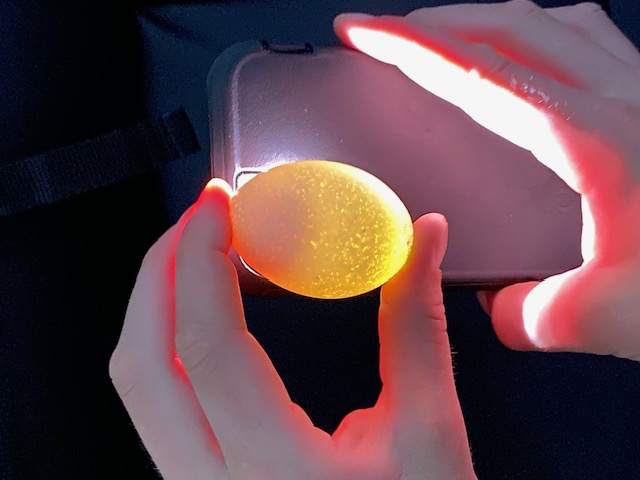
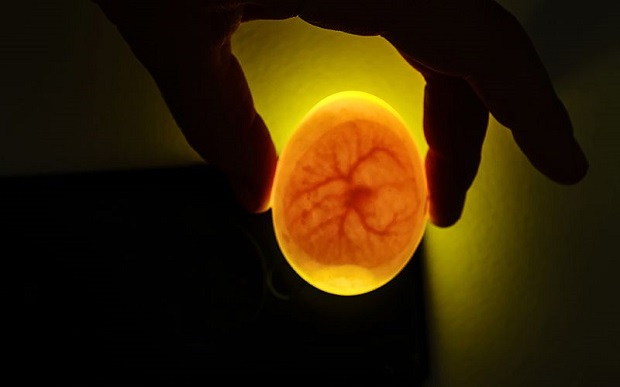
Using egg candling, you can witness the miracle of life unfolding day by day:
Days 1 to 3.
Mostly just the yolk. Look closely and you might catch a small cluster of cells starting to form.
Days 4 to 7. Spider-like veins start showing up as the circulatory system develops.
Days 8 to 14. The embryo grows, the interior darkens, and you may start to see movement.
Day 15 through hatching. The chick fills most of the egg by now, and movement becomes much more noticeable.
Reading What You See
A dark interior with clear veins usually means a healthy, developing chick. A clear yolk with no veins typically means the egg is infertile. A dark mass with no movement can mean a dead embryo, especially if you saw activity on a previous candling and it’s gone now.
Common Problems Candling Can Catch
Cracks, blood rings, clear eggs, or a dark, unmoving mass are all signs worth paying attention to. If you’re seeing a lot of problem eggs, the cause could be infertility to begin with, too much handling, unstable incubator conditions, or an incubator that’s stable but set to the wrong temperature or humidity. If you’re consistently running into issues, it’s worth reaching out to someone experienced with incubation to help troubleshoot.
FAQ
What’s the purpose of candling eggs?
It lets you check whether an egg is fertilized and developing normally, so you’re not wasting incubation time on eggs that were never going to hatch. It also helps you catch problems like dead embryos early, before they risk the health of the other eggs.
Is candling a reliable way to test fertility?
Yes, it’s the standard method. That said, signs of fertility, like veins and visible embryo growth, don’t show up immediately. It usually takes several days into incubation before you can tell.
Do store-bought eggs get candled?
Yes, most commercial eggs are candled as part of quality control, mainly to check for physical defects, blood spots, or signs of disease. Since those eggs are collected and refrigerated quickly, they’re not fertilized and won’t develop into chicks even if you tried to incubate them.
Candling takes a bit of practice, but it’s a genuinely useful skill once you get the hang of it. Handle your eggs gently, don’t candle more often than you need to, and you’ll get a real look at what’s happening inside long before hatch day arrives.
Have you tried candling yet? I’d love to hear how it went for you, drop a comment below.
Dave

Chickenmethod.com
I only have two 6 month old hens and two roosters (supposed to all be hens, but….) One hen has been laying eggs since Halloween, so 15 days as of this writing. I have 12 eggs in this little incubator I bought, and I also got a candler. I put the first week’s eggs in on Nov 6 and the second batch of 5 in on Nov 12. My lovely yellow hen is laying an egg a day (she missed one day when I was moving their hutch.) I candled them the first day in the incubator, they were all clear. Day 6, they all had a distinctive dark spot. I added water today and had to clear the rotator (which was sticking) so I went ahead and candled again. The first 7 were largely dark with the same dark spot, but I haven’t seen any veins. Or movement. I wasn’t sure if they were fertilized at first, but I figured out, yep. I’m not sure they’re still growing, but I’m going to continue as if I am sure they are. I ordered a more professional (stronger) candler. I ordered a very inexpensive incubator and a really cheap candler. I should have the new candler in a few days and I should be able to tell the difference. I hope. Wish me luck!
I wish you luck, Robyn!
I’m with you on proceeding as if they are fertile and growing. With two roosters you are assured of having fertile eggs. Just take care to not let the roosters hurt your hens if you know what I mean.
Your incubator doesn’t have to be expensive to get good results. Just keep an eye on your temp and humidity, and keep turning the eggs at least three times a day if you can.
I’d love to hear back from you about your hatch, either in these comments or at Dave@chickenmethod.com
Take care, Robyn!