
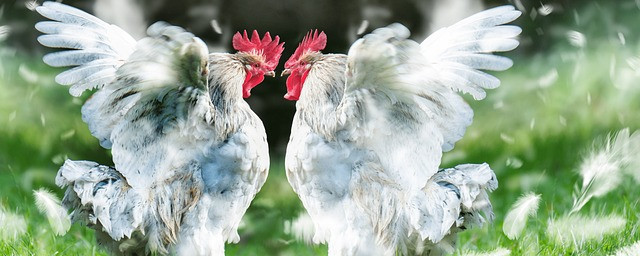
Are chickens social animals? Yes, chickens are highly social animals. They recognize individual flock members, form a clear pecking order, and even show preferences for their own breed when raised in a mixed flock. Fighting looks aggressive from the outside, but it’s actually how chickens establish and maintain the social order that keeps the flock stable.
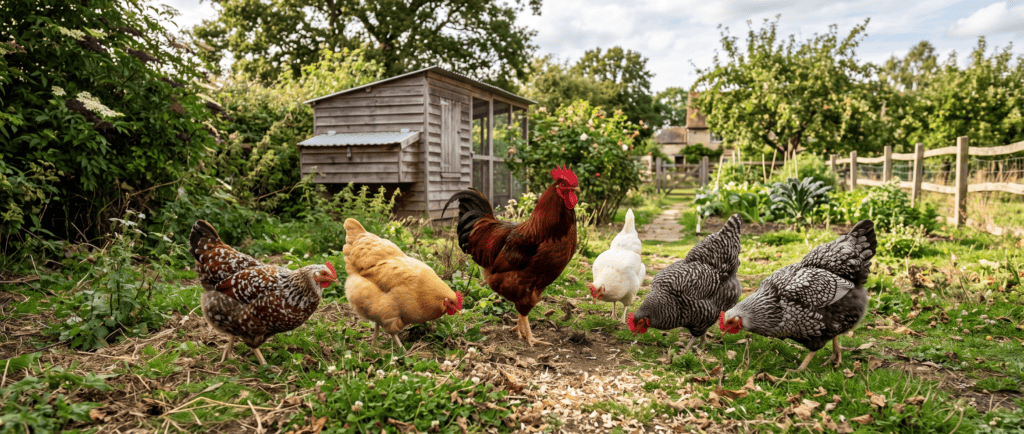
In my own flock, I keep a few different breeds, all raised together from chicks. Even so, as adults they tend to stick with their own kind. The Rhode Island Reds stay with the Rhode Island Reds, and the Brahmas stay with the Brahmas. That tells me they recognize each other and have real social awareness.
Table of Contents
Why do Chickens Fight?
Fighting is the social behavior chickens use to establish the pecking order. Most of the time it’s subtle, just a few well placed pecks. I’ve been pecked plenty of times myself, and while it’s surprising, it doesn’t really hurt me.
To a 3- or 4-pound chicken, though, those pecks leave a lasting impression. Once the hierarchy is set, it stays fairly stable unless a bird gets sick or passes on.
Chickens squabble over plenty of things: the best perch, a prized earthworm, it’s genuinely funny watching two birds chase each other over a worm, probably burning more calories in the chase than the worm is worth.
They bicker over nesting boxes too, and it’s common to see two hens crammed into the same box even when several others sit empty.
They’ll also jostle for position at the feeder and waterer. Controlling that jostling comes down to simple math. Using the circumference formula, 2 times pi times radius, a 10 inch feeder works out to about 31.4 inches around.
Figure roughly 4 inches of space per bird, and you can comfortably fit 7 to 8 chickens around a 10-inch feeder. Since the pecking order means the top birds eat first, your job is to make sure there’s enough food in the feeder so everyone gets fed when their turn comes.
Roosters and Fighting
Roosters fight to establish dominance, and if they’re kept confined, that fighting can turn severe. A few things help keep it in check.
Keep one rooster. Roosters guard the flock and are usually the first to sound the alarm if a predator shows up, and one rooster is enough to fill that role. If you’ve ever watched two roosters go after the same hen, you’ll understand why keeping just one matters.
Have enough hens. A rooster generally does fine tending 10 to 12 hens. Having more than one rooster with too few hens puts a lot of stress on the flock, especially the hens.
Let them free range. When chickens have room to roam, squabbling drops off significantly. Subordinate roosters especially benefit from having space to go their own way. This is harder to manage in an urban setting where space is limited.
Segregate if needed. If your birds are confined to runs, you can set up a separate space for extra roosters. It might feel unfair, but rehoming an extra rooster is often the better move. I recently gave a big Light Brahma rooster to a neighbor whose own rooster had been killed by a fox. Everyone came out ahead, especially my hens.
Keeping the flock calm matters for their overall well-being. Fighting and the stress that comes with it can lead to injury, death, reduced egg laying, feather loss, disease spread, and generally nervous birds. Calm chickens are happy chickens.
Why Hierarchy Matters
One flock, one leader. As I mentioned, pecking order gets established through fighting, and from chick to adult, chickens are constantly working out where they stand in that hierarchy. That matters because once it’s settled, it brings real stability to the flock.
If you keep one rooster, there’s no question who’s in charge. With more than one, they’ll fight it out to decide. There’s a dominant hen too, and it’s through this hierarchy that squabbles get settled and peace gets maintained.
Interestingly, if a flock has no rooster, a hen will sometimes take over that role. I once had a big Buff Brahma hen named Icky who stepped into the rooster’s job when we didn’t have one. As a chick, she’d been feather pecked by her brooder mates, and the only thing I had on hand to treat her was ichthammol ointment. It worked, and that’s how she got her name.
Give Them Space
I currently keep 7 adult chickens, and they free-range every day. I wouldn’t have it any other way. They roam over an acre of land daily, pecking and scratching for seeds, bugs, worms, and ticks. With that much space, fighting rarely even comes up. They’re too busy having fun.
If your birds are contained to a run instead, aim for at least 4 square feet of outside space per bird to keep things calm. For eight birds, that works out to an 8 by 16 foot run. My personal recommendation, and this is just my take, is to skip keeping a rooster in a run environment. The hens don’t need the protection in that setting, and the close quarters tend to be hard on them.
Give The Resources
Chickens need to be kept clean, well fed, well watered, cool in summer, and warm in winter. That means a solid coop with clean bedding, a reliable feeder, and a waterer.
I’ve covered these basics in detail elsewhere, so I won’t repeat them all here. The point is that keeping your flock distracted from bickering or outright fighting comes down to making sure their basic resources are solid and plentiful.
Roosts matter too. Chickens are instinctively drawn to roosting for the night. If your coop is big enough, two or three roosts give them options. I run two roosts in a 6 by 8 foot coop, and three plus a step in a 6 by 12 foot coop. They seem to genuinely enjoy having different vantage points to choose from.
FAQ
Are chickens actually social with each other?
Yes. Chickens recognize individual flock members, establish a clear pecking order, and often show a preference for staying near birds of their own breed even when raised together.
Why do chickens peck and fight each other?
Fighting is how chickens establish and maintain their pecking order. Most of it is minor, a few pecks to settle who ranks where, and once the hierarchy is set it tends to stay stable.
Does free ranging reduce fighting?
Yes, significantly. Chickens with room to roam squabble far less than birds kept in tight confinement, since there’s less competition for space and resources.
Can a hen take over the rooster’s role?
Yes. In flocks without a rooster, a dominant hen will sometimes step into that role, helping keep order and even watching for predators.
Chickens are social animals through and through. Fighting looks harsh, but it ultimately keeps the flock organized and calm. Give them enough space, food, water, and roosting options, and you’ll see a lot less squabbling and a much happier flock.
I thank you for reading this. I hope you got some useful information from it. Please leave a comment if you like. If you don’t, have a great whatever you do, and I’ll see ya ’round!
Dave

Chickenmethod.com