
How do you deal with aggressive chickens?
Chicken aggression is almost always caused by one of four things: overcrowding, competition for food and water, boredom, or a bird that is sick or in molt. Dealing with aggressive chickens means fixing the conditions first before trying to manage individual birds. Add space, add feeding stations, provide enrichment, and isolate any bird that is injuring others. Persistent aggression that does not respond to management sometimes means the bird needs to be rehomed or culled.
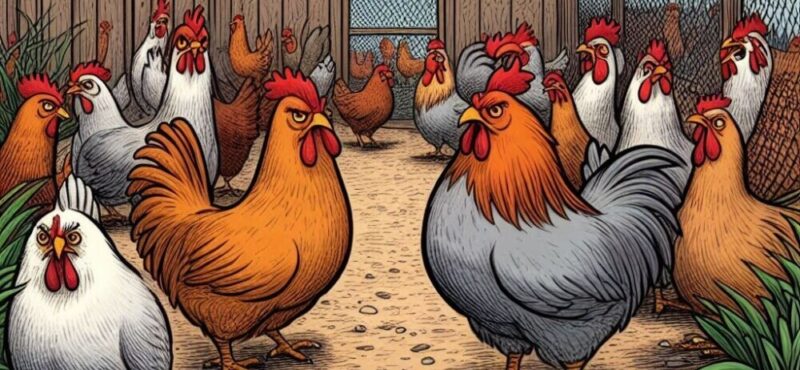
Chickens have a social structure, and they enforce it. A certain amount of pecking and chasing is normal and healthy. What forces you into dealing with aggressive chickens is when trouble starts and normal behavior tips into something more serious: injuries, birds being kept from feed and water, feather loss, and stress that affects the whole flock. That is the line between a pecking order and a problem.
Table of Contents
Why Chickens Get Aggressive
The key to dealing with aggressive chickens is understanding the cause, which is more useful than trying to suppress the behavior directly. Aggression in chickens almost always traces back to something environmental.
Overcrowding is the most common trigger. Chickens need room to move, forage, establish distance from each other, and avoid lower-ranking birds who would otherwise corner them.
Cramped conditions put the whole flock under pressure, and that pressure comes out as aggression. The minimum is roughly four square feet per bird inside the coop and ten square feet per bird in the run, and more is always better.
Competition over resources is a close second. If there are not enough feeding stations or waterers, dominant birds will control access, and lower-ranking birds will go without or fight their way in.
Either outcome causes problems. The fix is simple: more stations, spread far enough apart that one bird cannot guard all of them.
Boredom is underestimated. A chicken with nothing to do will find something to do, and what it finds is often another chicken. Hens that are confined without enrichment develop feather-pecking habits that are hard to break once established.
Illness and molt both cause irritability. A bird that is under physical stress is less tolerant and more reactive. If aggression appears suddenly in a bird that has been calm, check for signs of illness or molt before assuming the problem is behavioral.
Addressing this short list goes a long way toward dealing with aggressive chickens.
Types of Aggression Worth Knowing
So, you’re noticing some squabbling in your coop. Chicken aggression stems from something primal: the need to sort out who’s in charge.
Pecking order disputes are the baseline. Every flock establishes a hierarchy and maintains it through occasional pecking and chasing. This is normal. Intervene when it crosses into repeated targeting of a single bird, drawing blood, or preventing a bird from accessing food and water.
Food and resource aggression show up most clearly at feeding time. Watch your flock when you put out feed. If certain birds are consistently driving others away from the feeder, you need to start dealing with aggressive chickens by adding more stations or more space between them.
Rooster aggression toward hens is its own category. A rooster with too few hens will over-mate the ones he has, causing feather loss on backs and necks and genuine stress to the hens. If you have a rooster, the standard recommendation is one rooster per 8 to 10 hens. Below that ratio, the hens pay the price.
Broody hen aggression is predictable and temporary. A broody hen sitting on eggs will peck, growl, and fluff up at anything that approaches the nest. This is normal protective behavior. Use gloves when handling her, and leave her alone as much as possible. It passes once she is done brooding.
Seasonal Aggression
Flock behavior does not stay constant year-round. There are predictable windows when aggression spikes, and knowing them in advance helps you respond before things get out of hand.
Dealing with aggressive chickens in the Spring is the worst. Longer days trigger hormonal changes in roosters, intensifying mating behavior.
Roosters that have been calm through winter can become more aggressive toward hens and occasionally toward their keepers during this period. It usually settles as the season progresses but requires closer monitoring in March and April.
Molt is another flash point. Hens going through molt are physically uncomfortable and more irritable than usual. They are also more vulnerable to pecking because the new pin feathers coming in are sensitive and can draw blood if targeted.
During heavy molt, watch the flock more closely and be ready to isolate any bird that is being targeted around its pin feathers.
The end of winter confinement is a third trigger. Birds that have spent weeks in close quarters with limited outdoor access are primed for conflict by the time spring arrives.
When you open things back up, give them as much outdoor space as possible right away rather than a gradual transition. Getting them out and spreading them across a larger area releases the pressure that has been building.
Space truly goes a long way toward dealing with aggressive chickens.
What to Do About It

This run is spacious and durable, using hardware cloth for increased durability and predator resistance. Find peace of mind by letting your flock wander in this run.

Step one in dealing with aggressive chickens is more space. If birds are confined, extend the run. If they cannot free-range safely, a larger covered run alone solves most overcrowding-related aggression. This single change resolves more flock conflict than anything else.
Add feeding and watering stations. Two feeders and two waterers positioned on opposite sides of the run prevent any one bird from monopolizing access. This is cheap and immediate.
Enrich the environment. Hang a head of cabbage at bird height. Scatter scratch in the bedding to encourage foraging. Add perches at different heights so lower-ranking birds have somewhere to go. Rotate whatever you use to keep the novelty alive. A busy flock is a calmer flock.
Isolate birds that are causing injury. A bird that is drawing blood or relentlessly targeting another needs to be separated. Put the aggressor in a separate space for a week or two, then reintroduce gradually.
Reintroduction resets the pecking order, and the returning bird often comes back in at a lower rank, which solves the problem. Do not isolate the victim. That rewards the aggressor.
Address rooster problems directly. If a rooster is making life miserable for the hens and you cannot expand the flock size, rehoming the rooster is a legitimate solution.
If a hen has become so aggressive that she is injuring birds regularly and environmental fixes have not helped, culling is sometimes the right call and the last resort when dealing with aggressive chickens. It is part of responsible flock management.
A Note on Introducing New Birds: Introductions are a common trigger for serious aggression. An established flock will almost always attack new birds, sometimes severely. Never put new birds directly into the existing flock. House them separately but within sight of each other for two to four weeks so the flock gets used to their presence. Then introduce them during the day when the flock is outside and has room to spread out. Having enough space and enough feeding stations during the introduction period makes the transition considerably smoother.
When to Call a Vet
There are times when dealing with aggressive chickens involves getting outside help
Sudden aggression in a previously calm bird, especially when nothing in the environment has changed, is sometimes a symptom of illness rather than a behavioral problem. Pain, neurological issues, and certain infections can cause a bird to lash out unpredictably.
If you have ruled out environmental causes and a specific bird is displaying aggression that seems out of character, look for other signs of illness alongside the behavioral change: lethargy, changes in droppings, reduced feed intake, or unusual posture. Any combination of those warrants a call to a poultry vet.
Finding a vet who sees chickens is not always straightforward. The American Association of Avian Veterinarians maintains a directory at aav.org that covers avian specialists by region and is a reliable starting point.
The Bottom Line
Most chicken aggression is a management problem, not a personality problem. Give them enough space, enough resources, and enough to do, and most flocks settle into a stable, functional social order with minimal intervention.
When individual birds are the issue despite good conditions, isolation, rehoming, or culling are tools available to you. Use them without hesitation when the welfare of the rest of the flock requires it.
I hope you don’t have to worry about dealing with aggressive chickens, but if you do, I hope this article helps.
Dave

Chickenmethod.com
Frequently Asked Questions
Is it normal for chickens to peck each other?
Yes. Pecking is how chickens establish and maintain their social hierarchy. Light pecking and occasional chasing are normal. The problem is when pecking causes injury, prevents birds from accessing food and water, or targets one bird repeatedly. That requires intervention.
How do I stop a hen from bullying other hens?
Isolate the aggressor for one to two weeks, then reintroduce gradually. This resets the pecking order and the returning bird typically comes back at a lower rank. Also address the underlying conditions: add space, add feeding stations, and provide enrichment so the whole flock has less reason to conflict.
Why is my rooster suddenly aggressive toward me?
Roosters sometimes challenge humans, especially keepers they see frequently. Do not run from an aggressive rooster; that reinforces the behavior. Stand your ground, pick him up and carry him for a few minutes, or gently push him away. You are establishing that you are not a rival he can drive off. Consistent, calm handling over several days usually resolves it.
Can you mix aggressive and calm breeds?
With caution. Highly aggressive breeds mixed with very docile breeds create easy targets for bullying. If you want a mixed flock, choose breeds with similar temperament levels or err toward calmer breeds overall. Australorps, Barred Rocks, and Brahmas are reliably calm and hold their own without being bullies.
When should I cull an aggressive chicken?
When environmental fixes have been tried and have not worked, when the bird is repeatedly injuring flock mates, and when rehoming is not a realistic option. Culling an individual bird for the welfare of the rest of the flock is a legitimate and sometimes necessary management decision.