
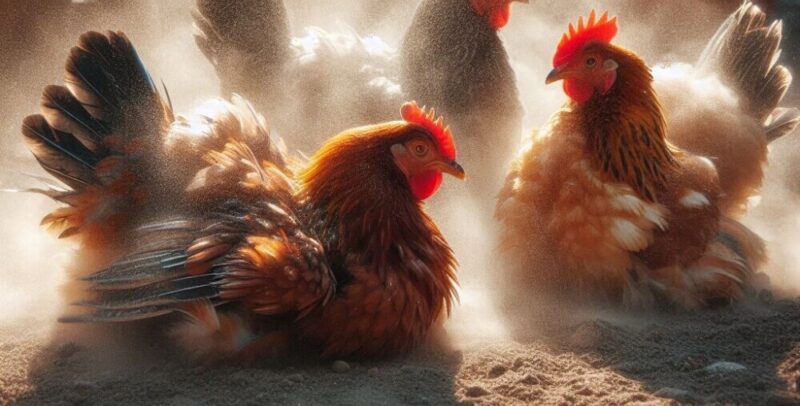
Why do chickens dust bathe, and how do you set up a dust bath?
Chickens dust-bathe in a chicken dust bath to control external parasites such as mites and lice, regulate skin oils, and maintain feather condition. It is an instinctual behavior and a reliable sign that your flock feels safe and comfortable. To set one up, choose a shaded spot with dry, loose soil or a container filled with a mix of fine dirt, sand, and wood ash. Keep it dry, about six inches deep, and large enough for multiple birds to use at once.
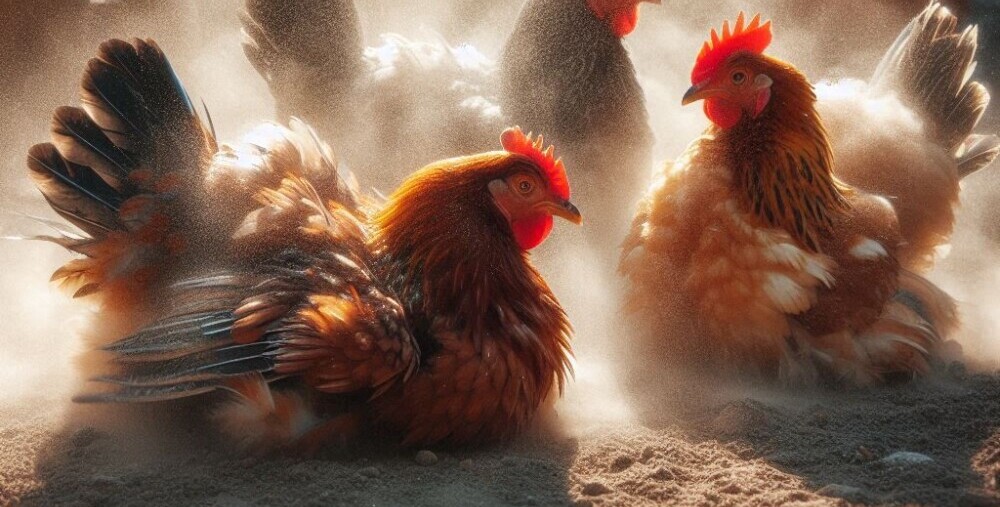
Dust bathing is one of the stranger things you see when you first start keeping chickens. A hen finds a patch of loose dirt, digs herself into it, and starts flopping around like something has gone wrong.
Nothing has gone wrong. She is taking care of herself in exactly the way chickens have been doing for thousands of years.
Once you understand what is happening, it becomes one of the more satisfying things to watch. A flock freely dust bathing is a flock that is comfortable, healthy, and unbothered.
Table of Contents
What A Chicken Dust Bath Actually Does
The mechanics of a chicken dust bath are straightforward. Fine particles of dirt, sand, or ash work their way into the feathers and against the skin as the hen rolls and fluffs.
Those particles suffocate mites, lice, and other external parasites by clogging their respiratory systems and disrupting their ability to move through the feathers. It is effective pest control that requires no chemicals and no intervention from you.
Dust bathing also regulates the natural oils in a chicken’s skin and feathers.
Chickens produce oil through a gland near the base of the tail called the uropygial gland, and they distribute that oil across their feathers during preening. Dust bathing absorbs excess oil and prevents feathers from becoming overly greasy, which can reduce insulation and water resistance.
The behavior is instinctual. Chicks as young as a few days old will attempt to dust bathe even in a brooder with no loose dirt available, scratching at the bedding and going through the motions. They do not learn this from watching other birds. It is wired in.
Dust Bathing as a Social Behavior
Beyond the hygiene function, dust bathing is communal. Hens frequently bathe together, and there is often low-level competition for the best spot in a favorite patch. Watching several hens packed into the same depression, wings occasionally overlapping, is a common sight in a free-range flock.
This social aspect matters because it tells you something about flock dynamics. Birds that are stressed, afraid, or heavily bullied do not dust-bathe in a chicken dust bath freely.
A flock that dust-bathes regularly and enthusiastically is a flock that feels secure. If you notice a sudden drop-off in bathing behavior without a change in season or weather, it is worth paying attention to what else might have changed.
Setting Up a Chicken Dust Bath

OMRI LISTED FOR ORGANIC USE: Certified by the Organic Materials Review Institute, making it suitable for use in organic farming and gardening practices. Safe when used as directed.

If your birds free-range, they will find their own spots, and you will not need to do much beyond accepting that certain patches of your yard are going to become dedicated chicken craters. They prefer dry, loose soil under cover, often beneath a bush, overhang, or tree where rain does not reach.
For birds in a run or coop without access to natural soil, you need to provide a container. A few options work well: a plastic storage tub, a wooden frame, a large plant saucer, or an old kiddie pool. Depth matters more than width. Six inches of material is a good minimum; birds need to be able to dig down and coat themselves fully.
Fill it with a combination of fine dirt, coarse sand, and wood ash. Each component has a role. Dirt is the base material. Sand adds grit and drainage. Wood ash has mild pest-repellent properties and is particularly effective against lice. Aim for a ratio of roughly two parts dirt to one part sand to one part ash.
A word on diatomaceous earth. It is widely recommended for dust baths and is effective against parasites. However, the particles are microscopically sharp and can cause respiratory damage if inhaled in quantity.
If you use it, apply it sparingly and mix it well into the base material rather than adding a heavy top layer that birds will kick directly into the air around their faces. Food-grade diatomaceous earth is the only type appropriate for use around chickens.
Locate the bath in a shaded spot if possible. Direct sunlight dries the material out quickly and makes it less effective.
Rain is the bigger problem. Wet dust bath material is useless and can become a breeding ground for bacteria. If your run is not covered, consider putting up a simple roof over the bath area or bringing the container under cover during wet weather.
Keeping It Working
Maintenance is straightforward. Check the material periodically and rake it loose if it has become compacted. Remove any droppings you find in it, which will happen because chickens are not particular about where they go. Add fresh material as needed to maintain a depth of six inches or more.
If the bath has gotten wet and packed down, replace the material entirely rather than trying to dry it out in place. A fresh bath encourages use. An old, compacted, foul-smelling bath does not.
Once or twice a year, give the container a full cleanout, let it dry in the sun, and start fresh. This resets the material and removes any accumulated debris or contamination that regular raking misses.
When Chickens Are Not Dust Bathing
A flock that does not dust-bathe despite having access to suitable material is telling you something.
Check for overcrowding around the bath area. If one or two dominant birds are monopolizing the spot, lower-ranking hens will wait or avoid it entirely. Adding a second bath location solves this immediately.
Also, check the material. If it has become wet, compacted, or contaminated, birds will avoid it even if they are not showing obvious signs of discomfort elsewhere. Fresh material and a clean container usually bring them back.
A sudden drop in dust bathing across the whole flock, where previously all the birds were using the bath regularly, warrants a closer look at flock health and environmental conditions. Stress from a predator, a change in routine, or a health issue can suppress the behavior across the board.
Take care.
Dave

Chickenmethod.com
Frequently Asked Questions
How often do chickens dust bathe?
Most hens dust-bathe every 1 to 2 days when conditions allow. Access to a good bath spot and dry weather are the main factors. Confined birds without a proper bath may go longer between sessions, which increases their parasite risk over time.
Can chickens dust bathe indoors?
Yes. If birds are housed indoors or in a covered run, provide a container filled with fine dirt, sand, and wood ash. They will use it the same way they would an outdoor spot. Keep it dry and replace the material regularly.
Is diatomaceous earth safe for chicken dust baths?
Food-grade diatomaceous earth is safe when used in small quantities, mixed well into the base material. Avoid adding a thick top layer that birds will kick directly into the air around their faces. The sharp particles can cause respiratory irritation if inhaled in significant amounts.
What is the best material for a chicken dust bath?
A mix of fine dirt, coarse sand, and wood ash works well for most situations. Each component serves a purpose: dirt as the base, sand for drainage and grit, ash for mild pest control. Avoid anything treated with chemicals or anything that retains moisture.
Why is my chicken dust-bathing in the nesting box?
Hens sometimes dust-bathe in nesting boxes when they do not have access to a proper bathing area. It makes a mess of the nesting material and can crack eggs. Providing a dedicated dust bath container resolves this quickly in most cases.