
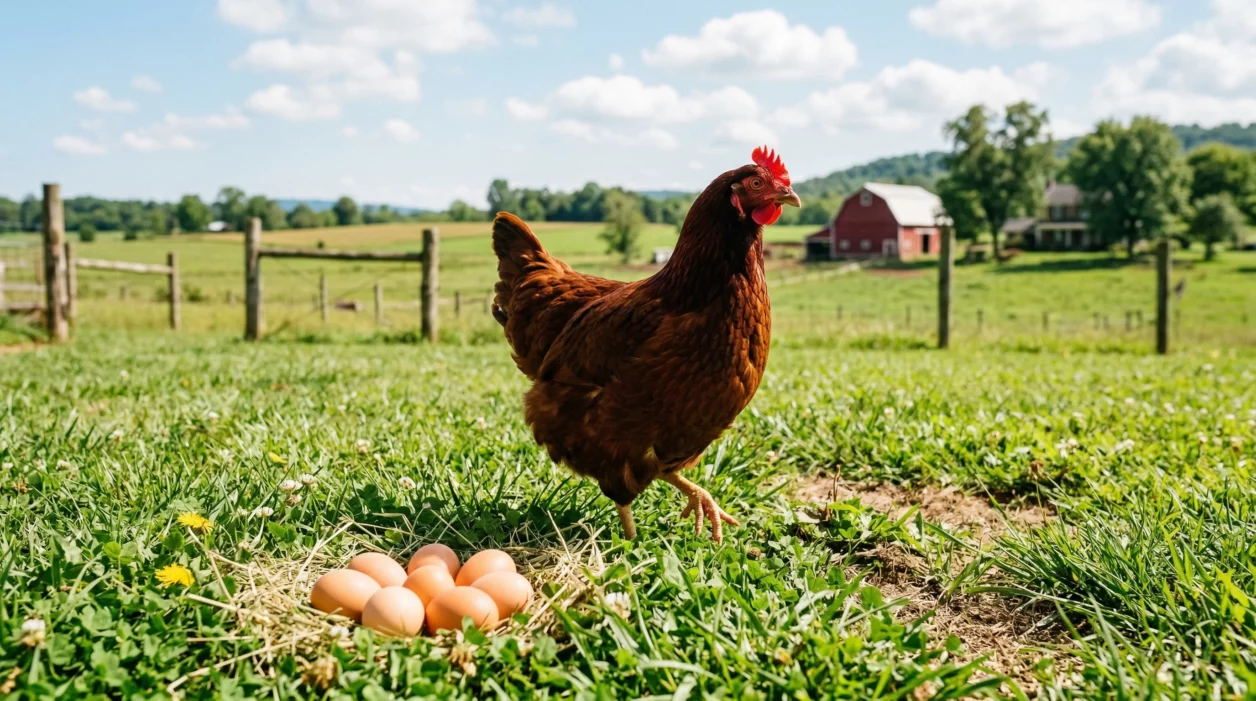
Are Production Red chickens good layers? Production Red chickens have built a solid reputation in backyard flocks, mostly because they lay eggs like champs. What about their egg production power, their temperament, and if they’re right for your setup?
I’m raising these birds in my own flock, so I’ve got some first-hand notes and practical tips to share about Production Red chicken layers.
What Are Production Red Chickens?
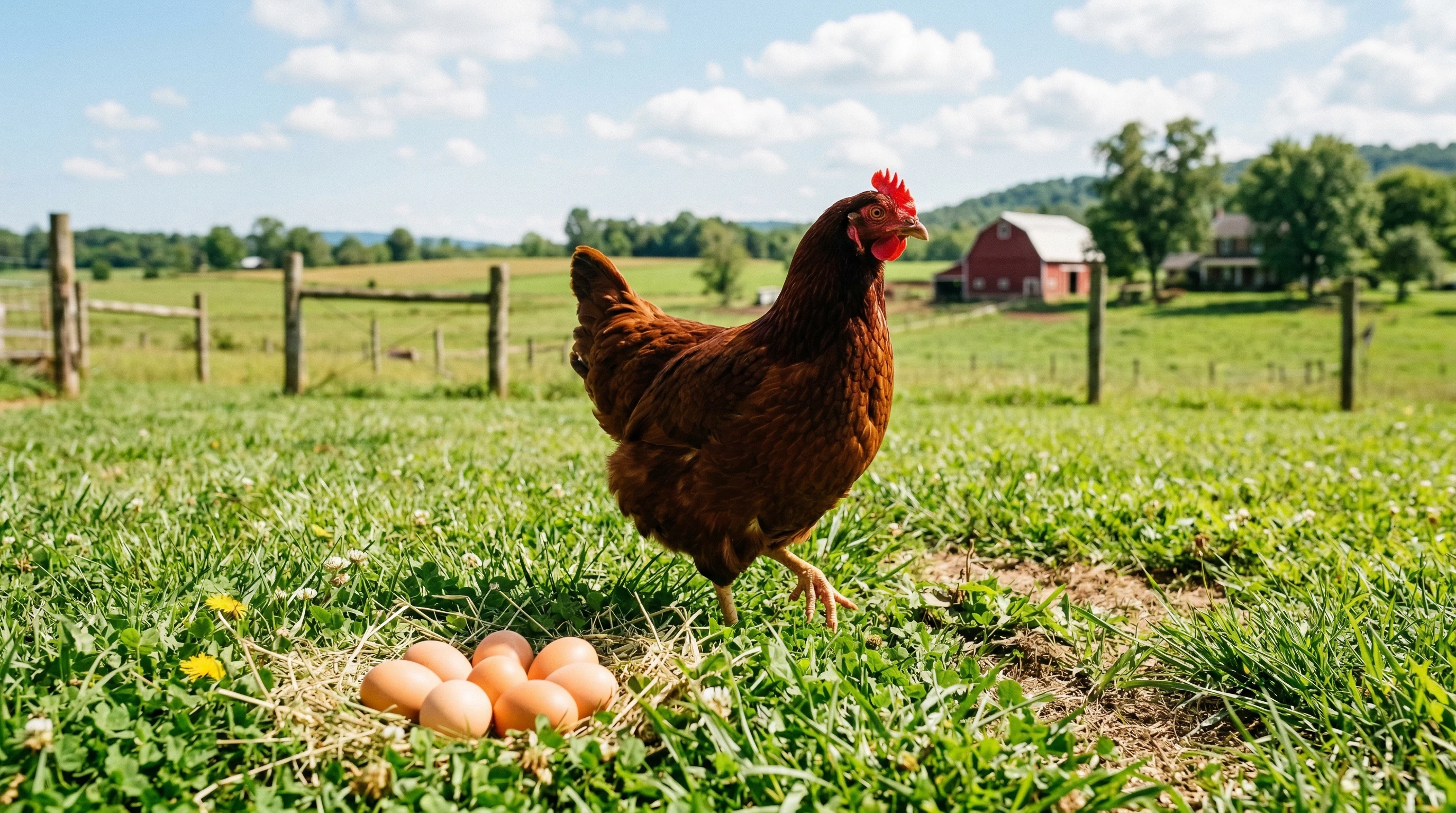
Production Red chickens are a hybrid breed created by crossing Rhode Island Reds with New Hampshire Reds (the rooster vs. the hen does not meaningfully affect the outcome), selectively developed for consistent, high-volume egg production. Slightly lighter in color and weight than pure Rhode Island Reds, they are not recognized as a standardized breed but are widely regarded as one of the most practical laying hens for backyard and small-scale farmers.
So if you are aiming for a reliable, affordable, low-maintenance layer, Production Reds are a great choice.
I have Rhode Island Reds, too, and I love them for their hardiness and strong foraging instinct. They lay beautiful, large brown eggs to the tune of around 250 a year, but the Production Reds have them beat in sheer numbers, at 300 eggs laid per year.
Some folks confuse Production Reds with Rhode Island Reds, but there are a few differences. And while you might be new to raising a small flock and think all the chickens look alike, stay with it for a while, and soon you will be calling them by name.
Are Production Reds Good Layers?
Production Red chickens are reliable, high-output layers, averaging 5–7 eggs per week per hen with laying typically beginning at 5–6 months of age. Their eggs are consistently large and brown with sturdy shells. Under proper care, most hens sustain peak production for two to three years, making them a practical choice for both backyard keepers and small-scale egg sellers.
That’s great, right? You need to consider the numbers. If you don’t have friends to give them to or an outlet for selling them, those eggs will pile up fast!
On the other hand, they make excellent gifts for your neighbors who don’t have chickens. When my chicken count is high, I take them to work and give them away. Those not used to farm-fresh eggs almost always tell me how much better they are than factory farm eggs.
One thing is for certain. You’ll always have plenty for your breakfast table and baking needs.
Production Red Chicken vs Other Breeds
Production Red chickens compare favorably with other popular laying breeds. ISA Browns may edge them in first-year output, but Production Reds tend to be hardier over time. Compared to Rhode Island Reds, Production Reds mature faster and lay more eggs early on. Australorps offer a calmer temperament but are less widely available, making Production Reds a more accessible choice for beginners.
Don’t get me wrong. Every one of these breeds is a winner.
Let me go off on a tangent here to share my experience.
I’ve had Rhodies many times, and I’ve heard horror stories about their temperament.
Maybe I’m lucky, but I have never had a mean Rhode Island Red. Australorp is true to its description – calm, quiet, easy to love, and stellar egg layers.
Let’s get to the comparisons:
- Production Red vs ISA Brown: ISA Browns typically edge Production Reds in raw first-year output, averaging around 300–320 eggs annually compared to Production Reds’ 260–280. However, ISA Browns tend to burn out faster. Production Reds generally maintain consistent egg production into their third year, making them a better long-term investment for backyard keepers.
- Production Red vs Rhode Island Red: The genetics are closely related, but Production Reds are selectively bred for faster maturity and higher early egg counts. Rhode Island Reds are heavier, longer-lived birds that suit dual-purpose (meat and eggs) setups better. If eggs are your primary goal, Production Reds reach the nesting box sooner and lay more consistently in years one and two.
- Production Red vs Australorp: Australorps hold the world record for egg production in a single year and have a notably calm temperament; both are genuine advantages. But they’re harder to source, often pricier, and can be more sensitive to heat. Production Reds are more widely available, more heat-tolerant, and a more forgiving choice for first-time flock owners.
For backyard keepers prioritizing consistent egg output, Production Reds offer a practical middle ground. Stronger longevity than commercial hybrids like ISA Browns, higher early production than dual-purpose breeds like Rhode Island Reds, and broader availability than Australorps.
They’re typically priced affordably at most hatcheries, adapt well to both cold and moderate climates, and have a calm temperament that suits mixed flocks.
For most beginners, they’re the lowest-risk starting point among high-production laying breeds.
How to Raise Production Red Chickens
Production Red chickens are straightforward to raise with the right foundational setup. Start chicks on an 18% protein starter feed, transitioning to calcium-enriched layer feed at point of lay. Provide 2–4 square feet per bird indoors and 8–10 square feet in the run, with one nesting box per three to four hens to prevent egg-hiding behavior.
- Choose Healthy Chicks: Always start with reputable hatcheries or farm stores. Look for alert, active chicks with clean, fluffy feathers.
- Feed Quality: When they’re young, feed a chick starter with at least 18% protein. As they start to lay, switch to a layer feed with extra calcium. Toss in some cracked corn, kitchen scraps, or garden weeds (they love it!) as treats.
- Space and Shelter: Production Reds don’t take up more room than other medium-sized hens. About 2 to 4 square feet per bird in the coop and around 8 to 10 square feet per bird in the run keeps everyone happy and less likely to peck each other.
- Nesting Boxes: A ratio of about 1 box per 3 to 4 hens keeps eggs clean and prevents “egg hiding” habits. I line my boxes with straw or wood shavings, which seems to keep the eggs cleaner.
- Health Maintenance: Check them now and then for mites, worms, and other pests. I add apple cider vinegar to the water once a week and keep their space clean to reduce the risk of disease.
Clean, fresh water must always be available. This is crucial. Chickens do not like to be thirsty, and a lack of water will quickly affect egg yield.
Production Reds are forgiving of minor management mistakes, which makes this routine achievable even for first-time keepers.
The primary factors affecting laying performance are feed quality, access to water, coop cleanliness, and stress from overcrowding. Get those four right, and most hens will hit and hold their laying potential without much intervention.
Life Span, Temperament, and General Care
Production Red chickens have an average lifespan of 4–6 years, with consistent egg production through year two or three before gradually declining. They are non-broody, low-stress birds that adapt well to mixed flocks and varied climates. Past their laying prime, many keepers retain them as practical garden helpers — experienced foragers that control insects and consume kitchen scraps efficiently.
They’re generally friendly birds that get along well with other breeds, and they’re hardy enough to handle a variety of climates.
Production Red hens aren’t known for being broody, so don’t expect them to set on eggs and raise chicks without some encouragement. If you want natural chickraisers, you might want to mix in a broody breed like the Orpington or Silkie along with your Production Reds.
Keeping things clean, dry, and well-fed is necessary for the health of all chickens, but honestly, Production Reds make it easy. They’re naturally robust and rarely suffer from common poultry diseases if given good food and a clean coop.
The coop doesn’t have to be spotless, but you want to clean regularly enough to keep lice, mites, rats, and other vermin at bay.
I’ve noticed these hens seem to handle stress and changes in routine better than some other breeds.
Moving to a new coop or dealing with seasonal weather swings doesn’t faze them much, so you can relax knowing they’ll likely keep laying eggs reliably.
Common Questions About Production Red Chickens
There are always a few questions that pop up when talking about production red chicken layers, especially from those just getting started:
How many eggs per year will I get?
Most Production Reds lay about 250 to 300 eggs annually if they’re fed well and stay healthy. This makes them a go-to choice for people wanting a steady supply for the whole family. Their productivity can dip a bit during extreme weather or when they skip protein, so keep an eye on their diet for the best results.
Do Production Reds tolerate hot and cold weather?
Yes, they do really well in a variety of conditions. Where I live, winters get pretty chilly, but I haven’t had problems with frostbite or stress in my flock. Summer heat just needs some shade and plenty of water. These birds fluff up their feathers in cold weather and seek cool dirt baths during hot spells. With decent shelter and a constant water supply, Production Reds seem to thrive almost anywhere.
Are Production Reds noisy?
They’re about average for noise. Hens sometimes “announce” a new egg or squabble at feeding time, but I haven’t had complaints from the neighbors. Even with several hens out in the yard, the level of chatter rarely causes problems in neighborhood settings.
Are they good for beginners?
Absolutely. Their easygoing nature, resilience, and solid egg output make them perfect for someone just starting out in backyard chickens. Even folks who have never owned chickens before usually report that Production Reds adjust quickly, get used to new routines, and rarely cause trouble with more delicate breeds.
Tips for Even Better Egg Production
Several targeted adjustments can meaningfully improve egg production in Production Red hens. Free-choice oyster shell supplementation prevents the thin shells common in high-output layers. Maintaining 14–16 hours of light daily throughout winter, using a low-wattage timer lamp, prevents seasonal drops in laying. Rotating foraging areas improves diet diversity and noticeably affects yolk color and egg flavor.
Even a high-yielding breed like the Production Red can use a little extra help now and then. Here are a few hands-on tips that have really made a difference for me and others:
- Oyster shell supplementation: Offer free-choice (served in a separate container apart from their food) oyster shell or crushed eggshell year-round. High-output layers deplete calcium quickly. Thin or soft shells are usually the first sign of deficiency.
- Winter lighting: Maintain 14–16 hours of light daily using a low-wattage timer lamp. Dropping below that threshold is the most common cause of seasonal slowdowns in laying.
- Coop hygiene: Replace soiled bedding at least weekly. Damp litter raises ammonia levels, which stresses hens and directly suppresses egg production. Cleanliness has a measurable impact on output.
- Foraging rotation: If space allows, rotate your hens through fresh ground regularly. Access to live grass, bugs, and seeds improves overall nutrition and produces noticeably richer yolk color within a couple of weeks.
A sudden drop in egg production almost always traces back to one of three causes: calcium deficiency, a predator’s presence stressing the flock, or an abrupt change in weather disrupting routine.
Check feed and supplement access first, then assess the coop environment for signs of nighttime disturbance. Identifying the cause quickly usually gets production back on track within a week or two.
Should You Choose Production Red Chickens for Your Flock?
Production Red chickens are a strong choice for backyard keepers whose primary goal is consistent egg output. They offer faster maturity than Rhode Island Reds, better longevity than ISA Browns, and broader availability than Australorps, with a calm, adaptable temperament that suits mixed flocks and beginner keepers.
Their main limitation, if you want chicks, is broodiness. Keepers wanting natural chick-rearing should supplement with an Orpington or Silkie.
For straightforward, low-maintenance egg production, Production Reds deliver reliably across most climates and setups.
Have a good one!
Dave
Chickenmethod.com