
How Do You Treat Lice on Chickens?
Chicken lice treatment begins with a diatomaceous earth dust bath or a pyrethrum-based spray, along with a full coop cleaning to remove eggs and lice hiding in bedding and crevices. Catching it early and treating every bird in the flock at once are the two most important things.
Chicken lice aren’t pleasant to think about, but chicken lice treatment isn’t difficult. It just takes a little time and consistency.
Table of Contents
What Are Chicken Lice?
Chicken lice are small bugs that live on chickens and other birds, ranging from about a millimeter to a quarter inch long. They’re typically a buff color with elongated, rice-shaped bodies. They feed on a chicken’s blood, dead skin, and shaft debris, and tend to concentrate around the vent area. Think of them as the chicken equivalent of fleas on a dog.
Lice live outdoors and hitch rides on wild birds, ground-dwelling animals, or even a fellow chicken keeper’s boots. It might seem strange that bugs can live on a bird that eats bugs, but lice are small, fast, and good at hiding under feathers. The good news is they’re treatable.
Signs and Symptoms
Healthy chickens are lively, upright, and alert. If a bird seems droopy, fatigued, or withdrawn, lice could be the reason. Other signs to watch for:
Pale combs and wattles. These should be brightly colored, since they help regulate body temperature. Paleness can point to anemia caused by lice feeding on blood.
Excessive scratching or preening. This isn’t exclusive to lice, but it’s worth investigating.
A drop in egg production. Again, other causes exist, like age, molting, or illness, but lice can be a factor.
Poor posture, droopy wings, or fatigue. Chickens slump and act low-energy when they’re not feeling well, just like we do.
Visible lice or egg clusters. Check around the vent area, especially if it looks persistently dirty. Some lice are easier to spot than others, depending on size.
Raw skin. Roosters can be rough during mating, biting and pulling feathers, which can look like a lice problem at first glance. A close inspection will tell you which it is.
Feather loss. Heavy feeding at the feather shaft can cause feathers to fall out.
Preventing Lice on Chickens
Chickens manage a lot of this themselves through dust bathing. Those dust bowls they dig in your yard aren’t just for fun; dust baths help keep them cool and go a long way toward preventing lice on their own.
Quarantine any new birds before adding them to your flock. Watch them for signs of illness or lice during that period, and only introduce them once you’re confident they’re clear. If they show any of the symptoms above, treat them first.
Keep a close eye on your flock day-to-day. Since you see them regularly, it’s easy to catch something off. Pick up a bird now and then to check them over. If you spot lice, treat right away, since infestations get harder to manage and can become dangerous if left unchecked.
Because chickens roost together, you’ll need to administer chicken lice treatment to the whole flock at once, not just the affected bird.
Keep the coop clean. Don’t let manure build up. I lay down a few inches of fresh bedding, then, after a couple of weeks, I sprinkle diatomaceous earth over it and add another inch of bedding on top. I repeat that for four applications before doing a full coop cleaning. It’s worked well for my flock of 7.
Keep your equipment clean too.
Chicken Lice Treatment
There are two home treatments worth knowing.
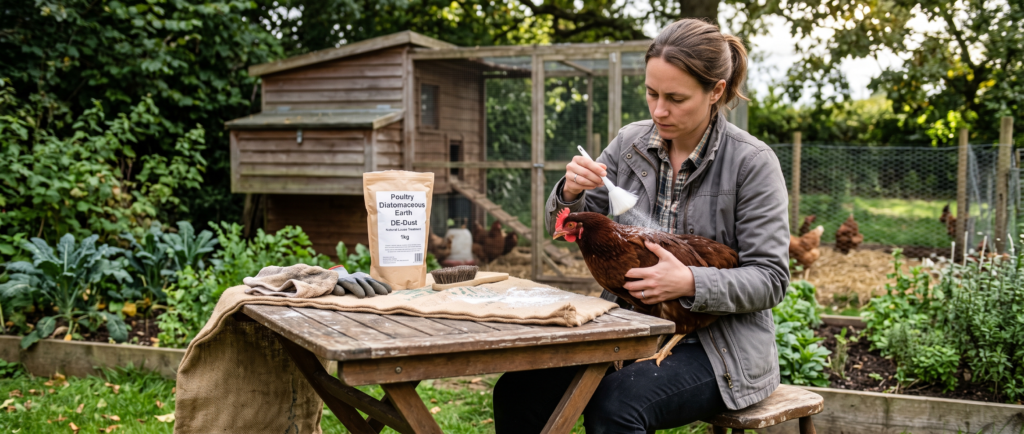
The first is a diatomaceous earth dust bath. Use a container like a kiddie pool, though it doesn’t have to be one. Fill it with sand to about 4 inches deep, mix in half a bag of diatomaceous earth so it doesn’t blow away, and you’re done.
Your chickens will use it on their own and self-treat as they go. Keep this bath around after the initial treatment since it doubles as ongoing prevention.
The second chicken lice treatment is a natural insecticide called pyrethrum, made from the flower tops of certain daisy-like plants. Follow label directions carefully, since too much can cause side effects.
Here is a non-toxic natural spray from My Pet Chicken that offers excellent results without harmful chemicals. It’s called Premo Guard Poultry Spray. Check it out.
Alongside either treatment, do a thorough cleaning of the coop and all equipment. Remove bedding from the floor and nesting boxes, spray every nook and crevice, and let it air out fully while keeping your chickens away. Wash feeders, waterers, and tools with soap and water where possible.
Final Thoughts
Chicken lice are common outdoors, so dealing with them isn’t unusual. They’re a real nuisance and can become dangerous if left untreated, but home chicken lice treatment is straightforward and inexpensive. Keep your coop and equipment clean, and your flock should stay lice-free and healthy.
FAQ
Can chicken lice spread to humans?
No. Chicken lice are species-specific and stay on chickens and other birds. They won’t infect people.
What’s the fastest way to treat a lice outbreak?
A diatomaceous earth dust bath combined with a full coop cleaning is usually the quickest home approach. Treat every bird in the flock at the same time since they roost together.
How do I know if it’s lice or just damage from rooster mating?
Rough mating can cause feather loss and raw skin that may look like a lice problem. A close inspection for visible lice or egg clusters near the vent will tell you which one you’re dealing with.
Does dust bathing really prevent lice?
Yes. Dust bathing is a natural behavior chickens use to keep themselves clean, and it plays a real role in preventing lice on their own.
I really appreciate you reading Chicken Lice Treatment. Leave me a comment below if you have questions or just want to say hello. All the best to you.
Dave

Chickenmethod.com
Yes, chickens, along with all birds are very good at keeping themselves clean. They spend a tremendous amount of time each day preening their feathers. I am sure they hate having lice as much as we do. I never knew that dust bathes also helped to keep them clean, but I am a parrot owner and they don’t do the same as chickens. I don’t think this remedy would work on my birds if they ever got lice, but it was interesting to read how it is done in the chicken world. I love the idea that they can enjoy a tumble in the remedy and get rid of lice.
Thanks Michel! My understanding is that parrots clean themselves primarily by preening. I’ve seen some horrendous photos of severe lice infestation in chickens. It looks really painful. I’ve not had lice to the point that it was a problem, but several years ago I had a pretty large mite breakout. Following the practice described in my post took care of the mites right away. My hens were very grateful. Haha – “a tumble in the remedy” is a great mental image and exactly what they do. Thanks again, and say hello to your parrot for me. -Dave