

How Do You Keep Chickens Active and Entertained in Winter?
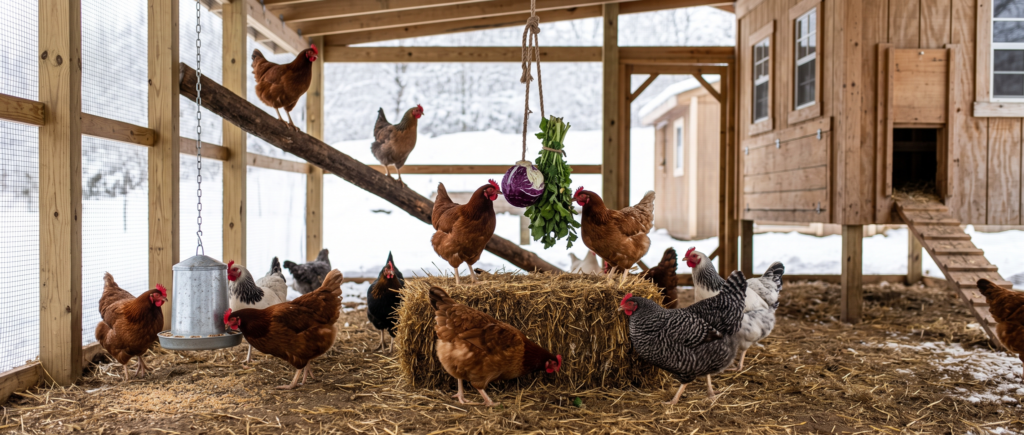
Keep chickens active in winter with interactive feeders, boredom busters like straw bales or hanging veggies, supervised outdoor time when weather allows, and a coop with enough space and roosting options to keep birds from getting on each other’s nerves. Bored chickens are more prone to feather pecking and reduced laying, so keeping them occupied matters as much for their health as for their mood.
Winter is a real adjustment for a flock. Chickens are tougher than people give them credit for, but cold weather still brings real challenges, and boredom is one of the more overlooked ones.
Table of Contents
The Cold Weather Basics
Chickens are warm-blooded, and while they handle lower temperatures better than most people assume, extreme cold still puts real stress on their bodies. Combs, wattles, and feet are the most vulnerable spots for frostbite, so understanding that risk matters for how you manage their space and routine through winter.
I get pushback every time I mention this, but occasionally a heater can keep your chickens from getting frostbite. When the temperature is far below zero, I use one until the intense cold passes.
It’s a common assumption that chickens can just tough out the cold season without any extra attention, but that’s not accurate. They need some help getting through the low-activity, low-daylight stretch of winter without it turning into a health problem.
How To Keep Chickens Active In Winter
Boredom sets in fast when birds are cooped up more than usual, so giving them things to do matters. Hanging cabbage or other veggies, or using treat-dispensing balls, keeps them occupied and mentally engaged.
Simple, low-cost options work well too. A pile of leaves or a straw bale gives them something to dig through and explore for a good while. Mixing things up regularly matters more than any single toy or activity, since chickens lose interest once something becomes routine.
Outdoor time still matters in winter. Setting up windbreaks or covered areas lets your flock get outside without full exposure to the elements. My birds get outside all winter except on the very coldest days. They’re genuinely curious about snow the first few times they see it, and once the ground clears, it’s business as usual for them. I try to keep their daily routine consistent, since unpredictability adds its own stress.
Rotating activities regularly keeps things interesting and also helps you figure out what your particular flock actually enjoys.
Keeping Egg Production Going
Light plays a real role in winter laying. Chickens need roughly 14 to 16 hours of light a day to keep laying consistently, so artificial lighting on a timer with a low-wattage bulb can make a real difference when natural daylight falls short.
More time spent inside also means more chances for boredom and squabbling, so give them something to do with that extra time. A cardboard box with a few doors cut into the sides makes a surprisingly effective hideaway and play space.
Nutrition needs a bump too. Chickens burn more energy staying warm, so a higher-protein feed helps keep egg production steady. A little cracked corn in the evening gives them an energy boost heading into the cold overnight hours, and putting it in a feeder ball adds some entertainment along with the calories.
A calm, low-stress environment matters just as much as diet. Enough space, predator protection, and a settled coop all support consistent laying. Stress will tank egg production fast, so keep an eye out for anything that might be spooking your birds. Extra roosts or a loft area give the flock more room to spread out, which helps reduce tension.
Keeping the Coop Comfortable
Good insulation makes a real difference in winter. It helps trap heat while still allowing enough ventilation to prevent moisture buildup, which can increase the risk of frostbite. Foam board or straw bales both work well for this.
Straw or hay bales double as entertainment, giving your flock something to explore while also providing insulation.
Bedding choice matters for comfort as much as warmth. Straw and pine shavings both insulate well and stay reasonably dry. Burying toy balls or other safe objects in the litter gives your birds something to dig up and rediscover through the winter.
Water is one of the trickier parts of winter care, since it freezes fast. A heated waterer solves most of that problem. Without one, you’re stuck breaking ice and refreshing water several times a day. Either way, constant access to unfrozen water isn’t optional.
Keep an eye out for frostbite on the combs and feet, as these are the most exposed and vulnerable areas. Watch for pale or darkened patches, and if you notice anything unusual, get your bird checked out before it turns into something worse.
You don’t need anything elaborate to keep a flock entertained through winter. A little creativity and a few free or cheap materials go a long way toward keeping your birds active, healthy, and laying through the cold months.
FAQ
Why do chickens get bored in winter?
Less time outdoors and shorter days mean less natural stimulation from foraging and exploring, which can lead to boredom-driven behaviors like feather pecking if not addressed.
How much light do chickens need to keep laying in winter?
About 14 to 16 hours a day. A timer with a low-wattage bulb is an easy way to extend daylight hours artificially when needed.
Can chickens go outside in winter?
Yes, as long as they have some protection from wind and the worst weather. Most chickens handle cold better than people expect, though very extreme days are worth keeping them inside for.
What are good boredom busters for chickens in winter?
Straw bales, hanging vegetables, treat-dispensing balls, and toys buried in the litter all work well. Rotating between a few different options keeps them more engaged than any single item on its own.
I appreciate you reading this. If you’ve got a boredom buster that’s worked well for your flock, or just want to say hello, leave a comment below and I’ll get back to you.
Dave

Chickenmethod.com